
The Cave
An underground world older than legend.
Over 150 caves exist inside the Rock of Gibraltar. This is the one the world came to see.

Origins
The Hollow Mountain
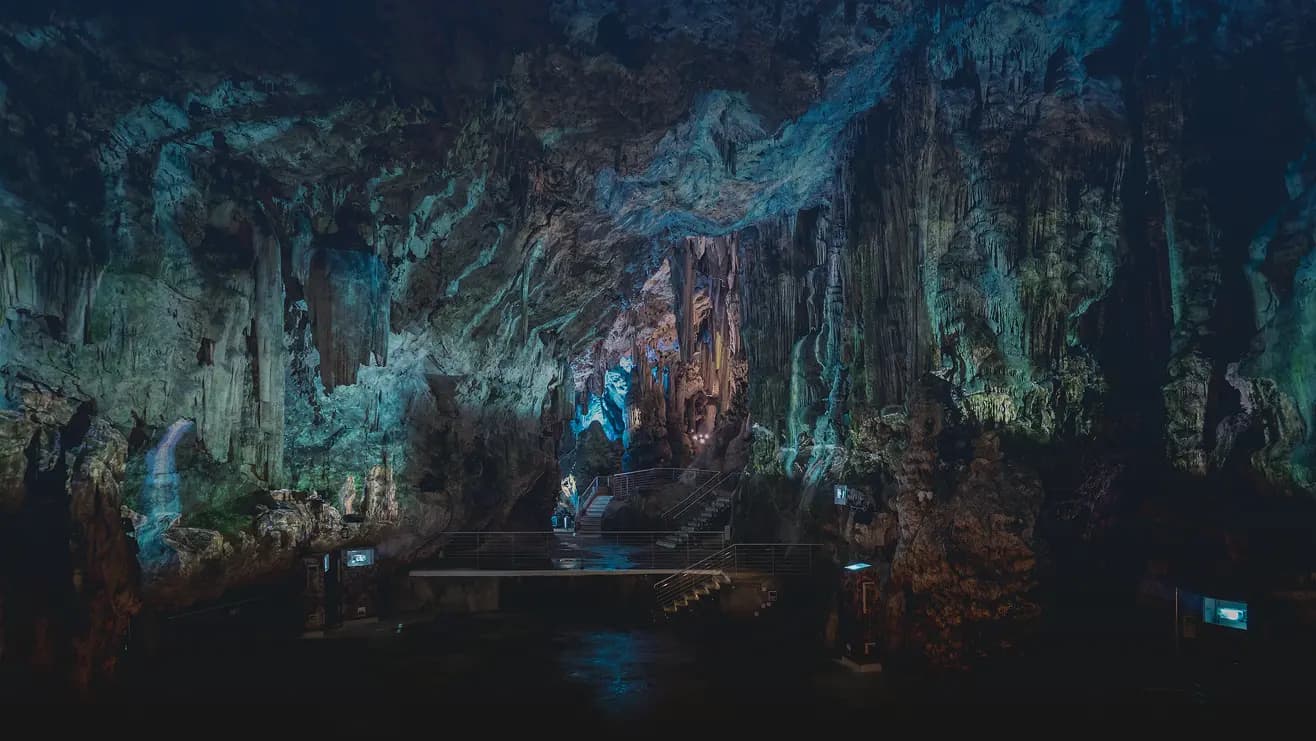
The Romans called Gibraltar Mons Calpe, meaning “the Hollow Mountain”. Beneath the 426-metre Rock lies a network of more than 150 limestone caves, shaped over millions of years as rainwater slowly dissolved the rock.
St Michael's Cave is the best known of these caverns. Its chambers, stalactites and stalagmites have inspired stories, exploration and human activity for thousands of years.
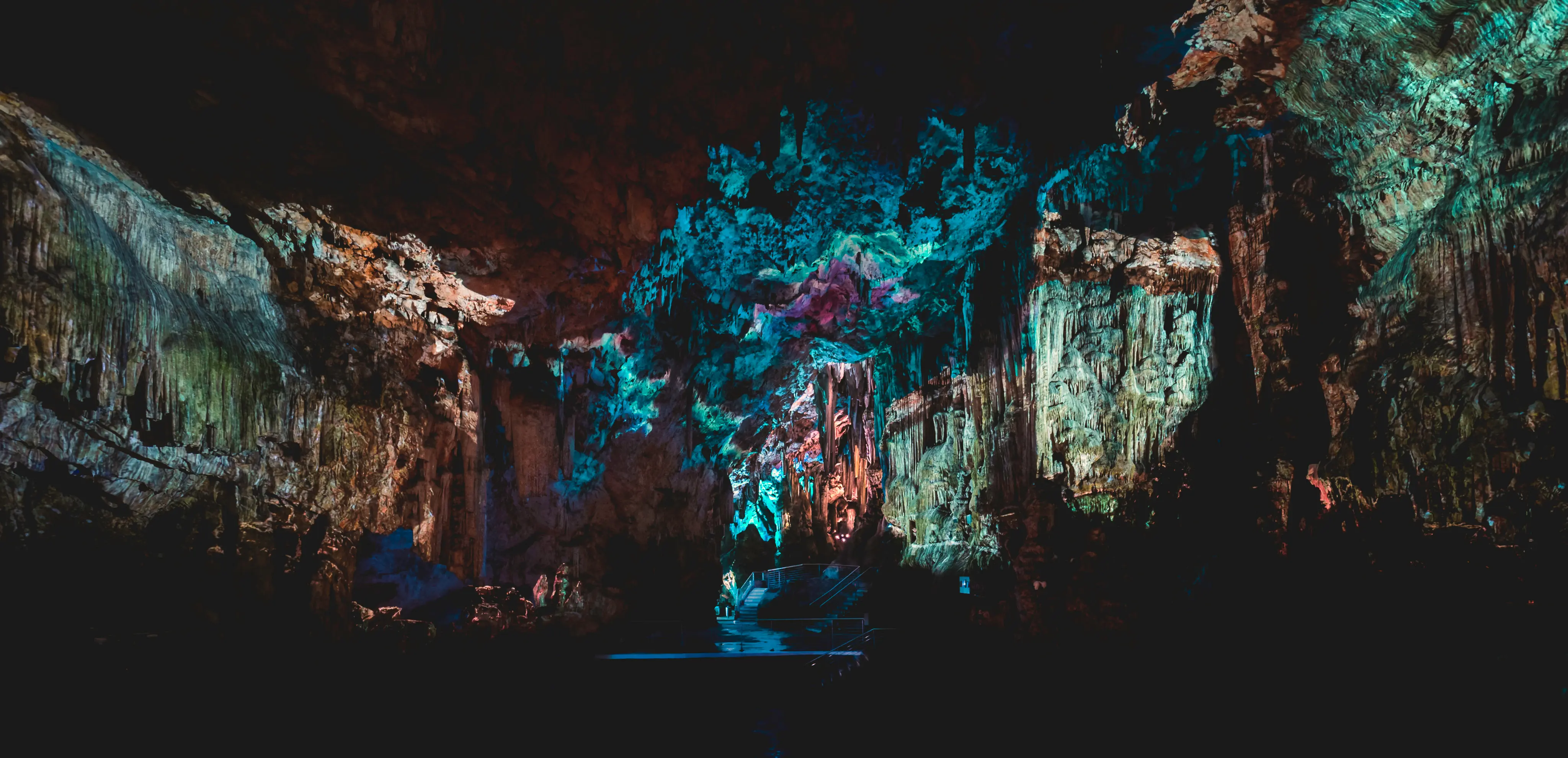
Limestone formations inside St Michael's Cave
c. 20,000 BC
What you'll see inside
Upper cave
Cathedral Cave
The main chamber is a vast space at the heart of the cave, known for its soaring ceiling, natural columns and limestone formations.
Formation
The Angel
A curtain of stalactites whose angel-like silhouette became visible when the lighting team illuminated the formation during the development of The Awakening.
System
Leonora's Cave
Explored in the 19th century by Captain Frederic Brome, Governor of the Military Prison. It was named after his wife, Leonora. One of four main aquatic systems.
Geology
Stalactites and Stalagmites
Formed as mineral-rich water deposits tiny layers of calcite, drop by drop. The largest formations have grown for hundreds of thousands of years.
Ancient evidence
Prehistoric Finds
Finds include a Neolithic bowl discovered in 1974 and a charcoal drawing of an ibex believed to date from 15,000 to 20,000 years ago.
Cathedral acoustics
A Natural Amphitheatre
Its natural acoustics have made the chamber a distinctive setting for concerts, ceremonies and performances.
History
20,000 years in a single cave.
c. 20,000–15,000 BC
Solutrean Cave Art
An ibex drawn in charcoal — one of the southernmost known Palaeolithic cave art sites in Europe.
c. 5,000 BC
Neolithic Bowl
Found in 1974. Confirms ritual or domestic use by Neolithic inhabitants.
AD 45
Pomponius Mela's Account
The geographer from Algeciras describes the Rock as 'a mountain with wonderful concavities.'
AD 711
Moorish Conquest
A defensive wall of Moorish origin at the cave entrance is believed to date to Tariq ibn Ziyad's arrival.
1704
The Spanish Night
Five hundred Spanish troops concealed themselves in the cave overnight, guided up the eastern face of the Rock by the goatherd Simón Susarte.
Victorian era
Torchlight and Military Bands
Military bands played in the first hall while soldiers held torches on stalagmites for distinguished guests.
1942
Wartime Hospital and Discovery
The cave was prepared as an emergency military hospital but was never used for that purpose. Excavation work also led to the discovery of Lower St Michael's Cave.
2021
The Awakening
50+ specialists install 16 projectors, 120+ lights and 60 speakers — a 360° immersive experience is born.